Finding the right home in Sedona is exciting. You may already be imagining morning coffee with red rock views, easy access to your favorite trails, or a winter retreat in the Village of Oak Creek. Once you are ready to make an offer, understanding the purchase contract helps turn those plans into a successful transaction.
The Arizona REALTORS® Residential Resale Real Estate Purchase Contract addresses much more than price. It establishes responsibilities, deadlines, and opportunities to investigate the property before you complete the purchase.
Our accompanying graphic highlights 10 key buyer points from the February 2026 contract. Here is how those points translate into practical decisions when buying a home in Sedona or the Verde Valley.
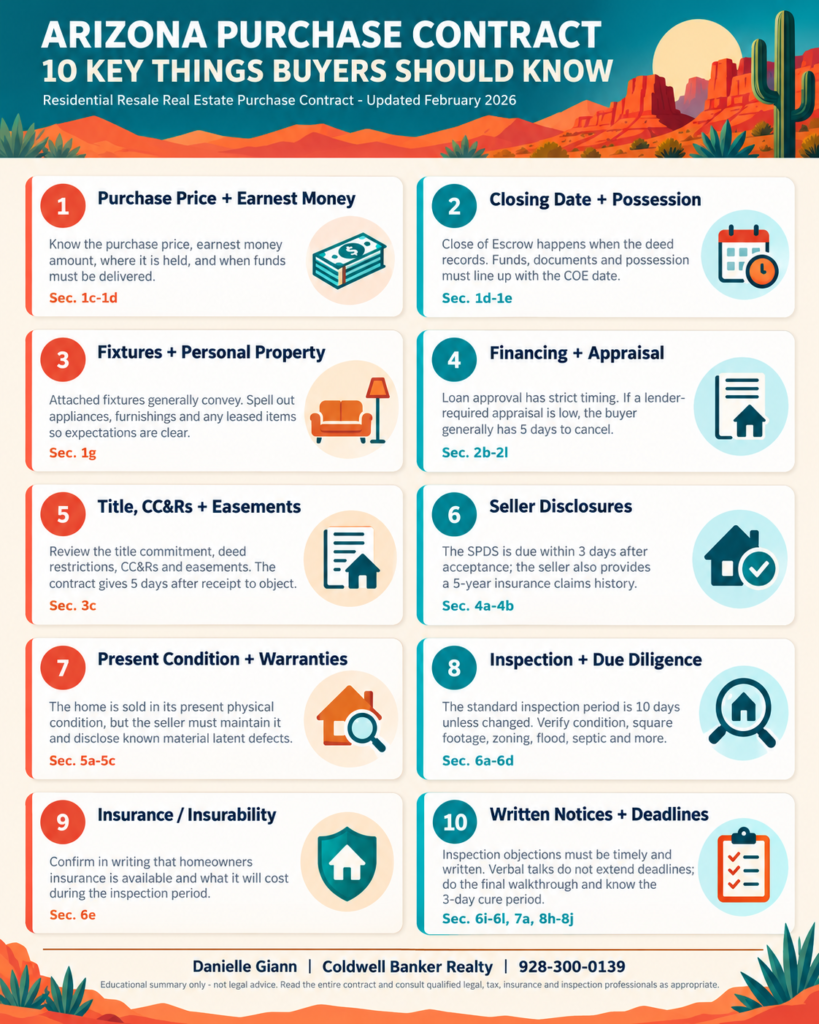
1. Understand Your Earnest Money Before Making an Offer
Your offer should clearly identify the purchase price, earnest money amount, and where that deposit will be held. Whether earnest money is returned following a cancellation depends on the contract and the circumstances; a buyer’s breach can put that money at risk.
Before signing, ask your agent to explain the deposit instructions and the contingencies that apply to your purchase. Treat the deposit as an important financial commitment, and keep documentation confirming its delivery.
2. Plan Around Closing and Possession
Under the standard contract, close of escrow occurs when the deed records at the appropriate county recorder’s office. Signing your closing documents is one step toward that event. Possession is generally delivered at closing unless the parties agree otherwise.
Coordinate moving arrangements with your agent and escrow company. If you are relocating from another state, confirm when you can actually receive the keys before scheduling movers or deliveries. [1]
3. Be Specific About What Stays With the Home
A furnished Sedona home can be especially appealing, but clarify exactly what your offer includes. Review the contract’s fixtures and personal property provisions, identify additional appliances or furnishings in writing, and discuss any leased equipment separately. [1]
If a particular refrigerator, patio set, or piece of furniture matters to you, describe it clearly. Photographs or an itemized inventory can help prevent confusion, particularly when a home has been presented as a furnished vacation property.
4. Know How Financing and Appraisal Affect Your Purchase
Stay responsive to your lender throughout escrow. Ask about outstanding documents, loan approval requirements, and the schedule for funding.
The standard appraisal provision addresses a lender-required appraisal below the purchase price. It generally gives the buyer five days after notice of the appraised value to cancel and receive an earnest money refund; otherwise, the contingency is waived, subject to the provision’s federal-law exception. Negotiated terms can change your position. [2]
A low appraisal does not automatically require the seller to reduce the price. Discuss your options promptly, and keep the cancellation deadline in view while any negotiations take place.
5. Read the Title Documents With Your Plans in Mind
The title commitment and related documents can identify easements, deed restrictions, and covenants, conditions, and restrictions, commonly called CC&Rs. Under the standard contract, buyers have five days after receiving the title commitment, and after notice of subsequent exceptions, to provide notice of items they disapprove. [3]
Review these documents with your intended use in mind. Would an easement affect your plans for a fence or addition? Do restrictions address rentals or exterior changes? Bring questions to your agent and title company early, and seek legal interpretation when needed.
6. Use Seller Disclosures to Guide Your Questions
The standard contract calls for delivery of the Seller’s Property Disclosure Statement, or SPDS, within three days after acceptance. It also requires an insurance claims history covering five years, or the seller’s ownership period if shorter. [3, 4]
Read the disclosures before your inspections whenever possible. If they mention a previous roof leak, water damage, or a repair, ask for available records and share that information with your inspector. The disclosures help you decide where to investigate further.
7. Understand What “Present Condition” Means
The contract provides for the property to be sold in its present physical condition. That does not eliminate the seller’s disclosure obligations or prevent the parties from negotiating repairs. The seller also has obligations concerning maintenance of the property and agreed repairs before possession or closing. [5]
Use inspection findings to distinguish routine upkeep from concerns that materially affect your decision. Focus repair discussions on clear descriptions, appropriate work, and written agreements.
8. Make the Inspection Period Count
The standard inspection period is 10 days after contract acceptance unless another period is agreed upon. Due diligence includes investigating the property’s condition and suitability for your needs. [6]
For a Sedona or Verde Valley purchase, consider questions about drainage, sewer or septic service, property boundaries, permits, and your proposed use. If rental income is part of your plan, verify the requirements and restrictions applicable to that specific address.
Arrange inspections promptly so you have time to review findings, obtain additional professional opinions, and decide how to proceed before your deadlines.
9. Investigate Insurance Early
If homeowners insurance is material to your decision, the contract calls for obtaining written confirmation of its availability and cost during the inspection period. [6]
Contact your insurance professional as soon as you have an accepted contract. Explain how you intend to occupy or use the home, and ask about coverage, deductibles, exclusions, and any additional policy needs. Include the actual insurance cost in your ownership budget.
10. Put Decisions in Writing and Track Every Deadline
Inspection objections require timely written notice. The Buyer’s Inspection Notice and Seller’s Response, commonly called the BINSR, is used to communicate the buyer’s inspection decision. [7]
Keep a shared calendar with your agent, and confirm that important notices and any agreed extensions are properly documented. Schedule the final walkthrough with time to address concerns about the property’s condition or agreed repairs. Ask your agent to explain the contract’s cure-notice process if a performance issue arises.
Local Guidance From Offer to Closing
Every buyer brings different priorities to a Sedona purchase. A primary residence, second home, and potential rental property each call for careful questions about how the home will fit your plans.
Damian Bruno and Danielle Giann’s Sedona Village Real Estate Group at Coldwell Banker Realty helps buyers understand their transaction, coordinate due diligence, and stay informed throughout escrow.
Planning to buy in Sedona, the Village of Oak Creek, or the Verde Valley? Contact our team to discuss your goals and prepare for your next purchase. Reach Danielle Giann at 928-300-0139.
This article and accompanying graphic provide general education about the February 2026 standard residential resale contract. Your signed contract, counteroffers, and addenda govern your transaction. Consult qualified legal, tax, lending, and insurance professionals as appropriate.
Sources
- Arizona REALTORS®: Property, closing, possession, and included items
- Arizona REALTORS®: Appraisal contingency
- Arizona REALTORS®: February 2026 Residential Resale Real Estate Purchase Contract
- Arizona REALTORS®: Seller disclosures and insurance claims history
- Arizona REALTORS®: Property condition and warranties
- Arizona REALTORS®: Due diligence
- Arizona REALTORS®: Description of transaction forms, including the BINSR